
Introduction
Welcome to the flavorful world of Korean cuisine! Today, we are diving into the delicious realm of Korean Beef Bibimbap Bowl. Imagine a harmonious blend of savory marinated beef, fresh vegetables, and perfectly cooked rice, all coming together in a vibrant and satisfying dish. This recipe is not just a meal; it’s an experience that will tantalize your taste buds and elevate your dinner game to a whole new level.
Originating from Korea, Bibimbap is a traditional dish that has gained popularity worldwide for its unique combination of flavors and textures. It is a true representation of Korean culinary artistry, showcasing a balance of colors, tastes, and nutritional goodness in a single bowl. The Korean Beef Bibimbap Bowl is a modern twist on this classic favorite, adding a touch of richness and depth with marinated beef.
As you embark on this culinary journey, get ready to savor the umami-packed beef, the crunch of fresh vegetables, and the satisfaction of a well-balanced meal. Whether you are a seasoned chef or a kitchen novice, this recipe is sure to impress both your palate and your guests. So, roll up your sleeves, gather your ingredients, and let’s create a masterpiece that will leave you craving for more.
Join me as we explore the art of crafting the perfect Korean Beef Bibimbap Bowl and discover why this dish is not just a meal but a culinary adventure that will transport you to the vibrant streets of Korea with every bite.
Why You’ll Love This Recipe
Prepare to be amazed by the myriad of reasons why the Korean Beef Bibimbap Bowl will become your new go-to dinner choice. Let’s delve into what makes this dish so special and irresistible.
First and foremost, this recipe offers a perfect balance of flavors and textures. The marinated beef brings a rich umami taste, while the fresh vegetables provide a delightful crunch. The combination of ingredients creates a symphony of tastes that will leave you craving more.
Additionally, this dish is incredibly versatile and customizable. You can adjust the ingredients to suit your preferences, making it suitable for various dietary needs. Whether you are a meat lover, a vegetarian, or looking for a gluten-free option, the Korean Beef Bibimbap Bowl can cater to your requirements.
Furthermore, this recipe is a wholesome and nutritious choice for a satisfying meal. Packed with protein, fiber, vitamins, and minerals, it not only delights your taste buds but also nourishes your body. Say goodbye to boring dinners and embrace a dish that is as good for you as it is delicious.
Lastly, the Korean Beef Bibimbap Bowl is a feast for the eyes as well. The vibrant colors of the vegetables combined with the succulent beef create a visually stunning presentation that is sure to impress your family and friends. Elevate your dining experience with a dish that is as aesthetically pleasing as it is flavorful.
Ingredients
Before we embark on our culinary adventure, let’s gather all the essential ingredients needed to create the perfect Korean Beef Bibimbap Bowl. Here’s a list of what you’ll need:
– Marinated beef slices
– Rice
– Carrots
– Spinach
– Bean sprouts
– Shiitake mushrooms
– Eggs
– Sesame oil
– Soy sauce
– Garlic
– Sugar
– Sesame seeds
– Gochujang (Korean red chili paste)
– Vegetable oil
– Salt and pepper
Feel free to make any ingredient substitutions based on your preferences or dietary requirements. You can customize this recipe to suit your taste, whether you want to make it spicier, vegetarian, or gluten-free. The beauty of the Korean Beef Bibimbap Bowl lies in its adaptability, so don’t be afraid to get creative and make it your own.
Step-by-Step Instructions
Now that we have our ingredients ready, it’s time to dive into the cooking process. Follow these simple steps to create a mouthwatering Korean Beef Bibimbap Bowl that will delight your senses:
1. Marinate the beef slices in a mixture of soy sauce, sesame oil, minced garlic, sugar, and pepper. Let it marinate for at least 30 minutes to allow the flavors to infuse.
2. Cook the rice according to the package instructions. For an authentic touch, you can use short-grain white rice, which provides a sticky texture that pairs perfectly with the other ingredients.
3. Prepare the vegetables by blanching the spinach, carrots, and bean sprouts in boiling water until tender. Saute the shiitake mushrooms with a bit of sesame oil until they are cooked through.
4. In a separate pan, fry the marinated beef slices until they are caramelized and cooked to your desired level of doneness. Set aside once cooked.
5. Fry the eggs sunny side up or according to your preference. The rich yolk adds a creamy element to the dish that complements the other ingredients.
6. Assemble your Bibimbap bowl by placing a generous serving of rice at the bottom. Arrange the cooked vegetables and beef slices on top of the rice, and place the fried egg on top.
7. Drizzle some gochujang sauce over the bowl for a spicy kick, sprinkle with sesame seeds, and serve hot. Mix everything together before digging in to experience the explosion of flavors in every bite.
Expert Tips for Success
To ensure that your Korean Beef Bibimbap Bowl turns out perfectly every time, here are some expert tips to keep in mind:
– Slice the beef thinly to ensure quick and even cooking.
– Use a mix of vegetables to add color and variety to your bowl.
– Adjust the level of spiciness by adding more or less gochujang according to your preference.
– Don’t skip the sesame oil, as it adds a distinct nutty flavor to the dish.
– Mix all the ingredients together thoroughly before eating to enjoy a harmonious blend of flavors.
By following these tips, you’ll be able to create a Korean Beef Bibimbap Bowl that is not only delicious but also authentic and true to its Korean roots.
Variations and Substitutions
If you’re feeling adventurous and want to put your own spin on the traditional Korean Beef Bibimbap Bowl, here are some creative variations and ingredient substitutions you can try:
– Substitute the beef with tofu or chicken for a different protein option.
– Add kimchi for a tangy and spicy twist.
– Incorporate different vegetables such as zucchini, bell peppers, or mushrooms to customize the dish.
– Use brown rice or quinoa instead of white rice for a healthier alternative.
– Experiment with different sauces or seasonings to create your unique flavor profile.
Feel free to mix and match ingredients to create a Bibimbap bowl that suits your taste preferences and dietary needs. The beauty of this dish lies in its adaptability, so don’t hesitate to get creative in the kitchen.
Serving Suggestions
When it comes to serving the Korean Beef Bibimbap Bowl, there are endless possibilities to enhance your dining experience. Here are some serving suggestions to elevate your meal:
– Pair the Bibimbap bowl with a side of kimchi for a traditional Korean accompaniment.
– Serve it with a refreshing cucumber salad or pickled radishes to balance out the flavors.
– Enjoy it with a cup of hot green tea or a glass of chilled soju for an authentic Korean dining experience.
– Garnish the bowl with additional sesame seeds or sliced scallions for a burst of freshness and flavor.
Get creative with how you present and enjoy your Korean Beef Bibimbap Bowl. Whether you choose to enjoy it as a comforting solo meal or as part of a festive feast with friends, this dish is sure to impress and satisfy.
FAQs
Here are some common questions that readers may have about the Korean Beef Bibimbap Bowl:
Q: Can I make a vegetarian version of this dish?
A: Absolutely! You can substitute the beef with tofu or simply load up on more vegetables for a meat-free option.
Q: Is it essential to use gochujang sauce?
A: Gochujang adds a unique flavor to the dish, but if you prefer a milder version, you can omit it or use a different sauce of your choice.
Q: Can I prepare the components in advance?
A: Yes, you can marinate the beef and prepare the vegetables ahead of time to save time when assembling the dish later.
Explore these FAQs to address any queries you may have about preparing and enjoying the Korean Beef Bibimbap Bowl, and feel free to experiment with different techniques and ingredients to suit your preferences.
Final Thoughts
As we conclude our culinary journey through the world of Korean cuisine, I hope you’ve been inspired to try your hand at creating the delectable Korean Beef Bibimbap Bowl. This dish is more than just a recipe; it’s a celebration of flavors, textures, and traditions that will enrich your dining experience.
So, gather your ingredients, embrace your inner chef, and embark on a flavorful adventure that will tantalize your taste buds and delight your senses. Whether you’re cooking for yourself, your family, or your friends, this dish is sure to leave a lasting impression and become a staple in your recipe repertoire.
Remember, cooking is not just about following steps; it’s about expressing your creativity and passion through food. So, savor every moment in the kitchen, enjoy the process of creating something delicious, and most importantly, relish every bite of your homemade Korean Beef Bibimbap Bowl.
Thank you for joining me on this culinary escapade. Now, it’s time to roll up your sleeves, put on your apron, and get cooking! Bon appétit!
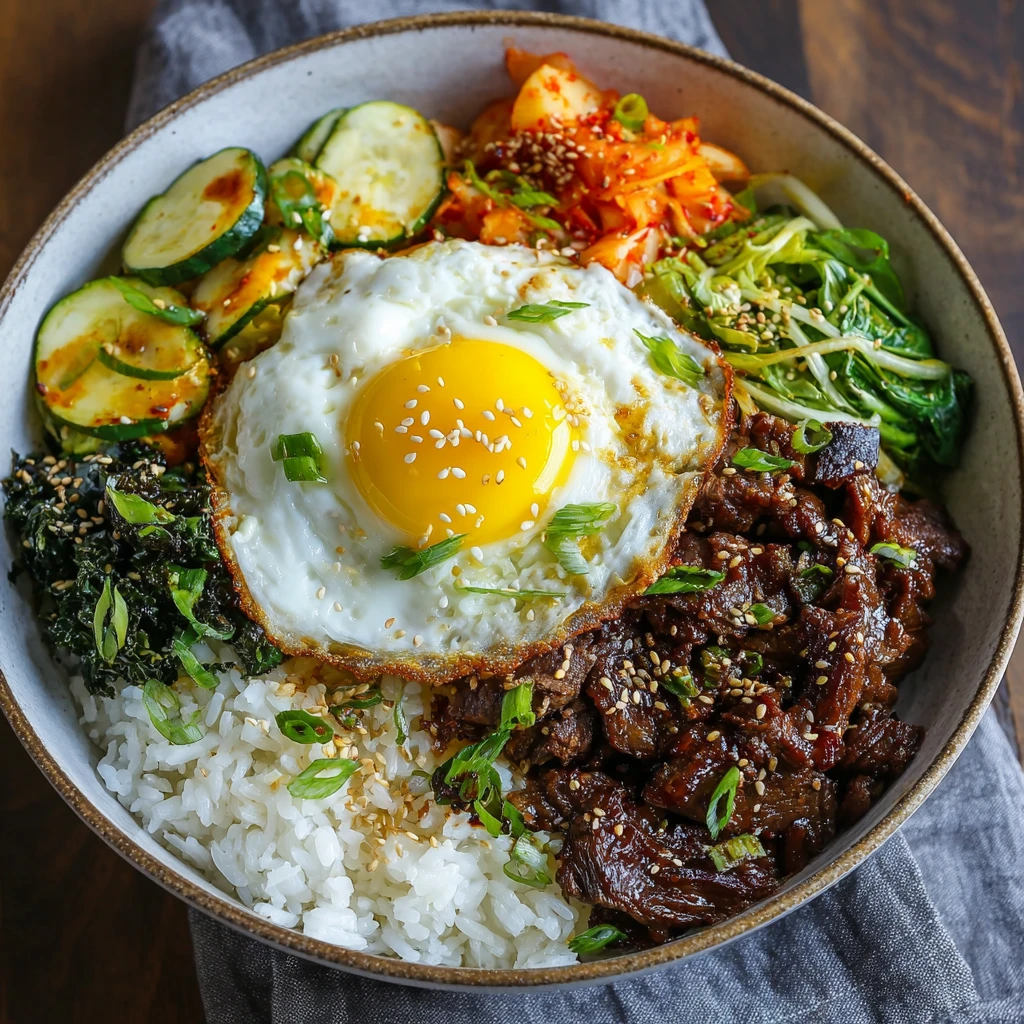
Korean Beef Bibimbap Bowl : Will Change Your Dinner Game
Experience the harmonious blend of savory marinated beef, fresh vegetables, and perfectly cooked rice in this vibrant and satisfying Korean Beef Bibimbap Bowl. A modern twist on the classic Bibimbap, this dish offers a balance of flavors, textures, and nutritional goodness in every bite.
Ingredients
- Marinated beef slices
- Rice
- Carrots
- Spinach
- Bean sprouts
- Shiitake mushrooms
- Eggs
- Sesame oil
- Soy sauce
- Garlic
- Sugar
- Sesame seeds
- Gochujang (Korean red chili paste)
- Vegetable oil
- Salt and pepper
Directions
-
Marinate the beef slices in a mixture of soy sauce, sesame oil, minced garlic, sugar, and pepper. Let it marinate for at least 30 minutes.
-
Cook the rice according to package instructions.
-
Prepare the vegetables by blanching the spinach, carrots, and bean sprouts in boiling water until tender. Saute the shiitake mushrooms with sesame oil.
-
Fry the marinated beef slices until caramelized and cooked to desired doneness. Set aside once cooked.
-
Fry the eggs sunny side up or according to your preference.
-
Assemble the Bibimbap bowl by placing rice at the bottom, arranging vegetables and beef slices on top, and placing the fried egg on top.
-
Drizzle gochujang sauce over the bowl, sprinkle with sesame seeds, and serve hot. Mix everything together before eating.